Blog
Industrial Shifts Aren't Linear: A Metrics Update
Using Wi-Fi for carrier offload is a paradigm shift. Our metrics will fluctuate while we win it.
Using Wi-Fi for carrier offload is a paradigm shift. Our metrics will fluctuate while we win it.
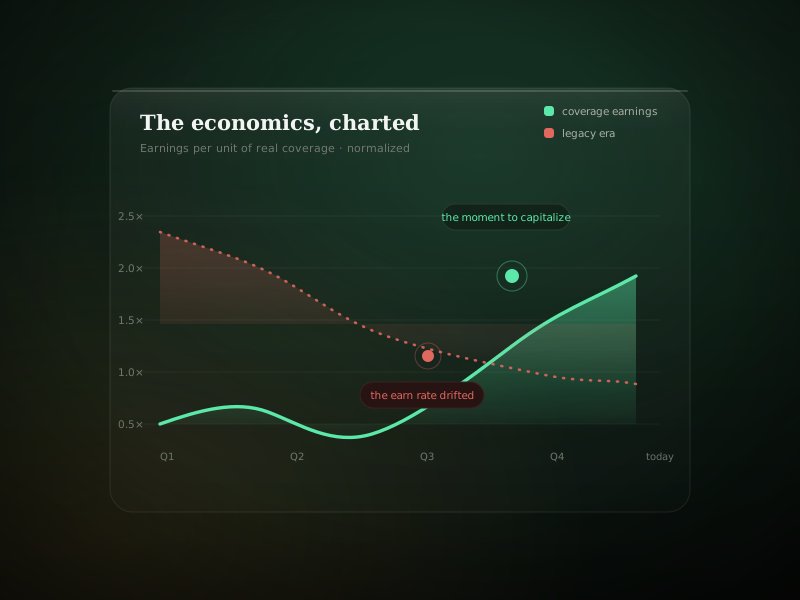
We believe using Wi-Fi for carrier offload is a paradigm shift — the biggest change to how indoor wireless gets built since the cell tower. Paradigm shifts don't chart as clean lines, and we want to be honest about that before anyone misreads the numbers.
So here is the update, plainly: some metrics will fluctuate. Offload volume, daily data sessions, average earnings per hotspot — all of them will move up, flatten, and occasionally dip while this shift is still being won. That's what adoption looks like before it settles into steady state.
Here's what we're seeing. Offload traffic is compounding overall, but unevenly. Weeks with new carrier integrations spike; weeks without them flatten. Seasonal patterns at venues move peaks and troughs around the calendar. A single stadium event can shift a region's numbers for the month.
Some observers will read a flattening week as a trend reversal. It isn't. The underlying drivers — more carrier partners onboarding, more venues going live, more devices offloading — are all still growing. It's the mix between them that changes week to week.
One advantage of how Sherwood is built: none of this is a black box. Settlements run daily on the Robinhood Chain, with data credits priced in SHW and every coverage proof verifiable on-chain. Anyone can audit the numbers we publish against the chain itself.
What to watch instead of the weekly noise: per-venue utilization, active offload subscribers, and offload volume over a rolling 90-day window. Those are the curves that tell the real story, and they are bending the right way.
We'll keep publishing the raw numbers, fluctuations included. The line will bend before it rises — that's the shape of a paradigm shift being won.
Follow the metrics as the network wins carrier offload — the raw numbers, published every week.